Una cantabria is the third in discordia reports
Gente que viene y ¡Bah!The national newspaper feature makes Bea’s private life part of a much wider public story: it identifies her as the former fiancée of Víctor, connects her family to San Esteban’s political and biomass disputes, and helps turn local tensions into national entertainment news.
From Hidden Camera to Public Profile
The feature followed a hidden-camera segment about an incident at Hotel Cantábrico. The footage showed a hotel receptionist, his head outside the frame, describing how a woman named Beatriz had entered Víctor’s room, claimed to be his ex-girlfriend, and thrown a shoe at him. Bea recognized the receptionist’s voice while watching television with her family; her nephew confirmed that the report was about her. The newspaper then used the episode as the basis for a fuller profile, adding a photograph of Bea entering the Andrada family home and presenting her as the woman caught between Víctor and the TV News Presenter. What had been a private rupture was now a nationally circulated identity, assembled from surveillance, personal history, and a pointedly sensational frame.
The Family as Public Scandal
The profile widened its subject from Bea’s broken engagement to her family and its place in San Esteban’s political conflict. It recounted that she had studied architecture in Madrid, met Víctor there, and nearly married him before the TV News Presenter entered their story; after the breakup, Bea had returned to her family home. The article turned these biographical details into an explanation for her supposed instability, while introducing her mother as a popular local healer and Irene as a controversial mayor from Izquierda Unida. It tied Irene’s public support for the biomass plant to an accusation of favoritism, alleging that she had arranged work for Bea with the businessman whose project she had backed through the municipal government.
Débora’s marriage and separation were folded into the same portrait: the article said that she had become pregnant by a dwarf stripper and was now separated from Juan, a well-known firefighter. It also alleged that a Guardia Civil officer performed unofficial tasks for Irene, clearing up her political troubles and those involving her family, and invoked a special friendship between the officer and Irene’s younger brother. By placing these claims beside the biomass controversy, the feature recast a family’s private entanglements and local political disputes as one connected scandal. Its account compared the family to the Sopranos and used their supposed eccentricity to reinforce its portrayal of Bea as disturbed by inheritance.
National Reach and Political Reframing
The article’s closing thrust made Bea’s arrival in San Esteban a vehicle for explaining the town to a national audience. It suggested that, in a place where little usually happened, the former fiancée had put the village on the map through celebrity gossip. Bea recognized the sharper implication: issues that might otherwise have remained local—including accusations of influence-peddling and malfeasance around the biomass project—were now circulating in the pages of a gossip section that many people read. The report did not merely expose a private history; it packaged family scandal and political controversy together, making each appear to confirm the other.
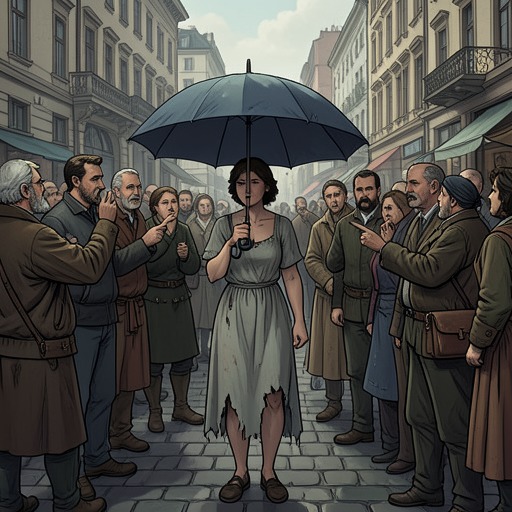
That framing shaped what happened when the story spilled into the street. At the demonstration, Pacheco identified Bea to the assembled journalists and cameras, who pressed her about whether Irene had secured her a job with the biomass company. Bea found herself pursued through the crowd, although she had planned to marry discreetly only two months earlier and considered herself a private person. The article’s profile had made her recognizable and had supplied the press with questions that joined her romantic history to Irene’s political conduct.
The national attention also intensified the contest over how the biomass project would be understood. In a televised interview, Rebeca Ramos challenged Irene over the plant’s environmental and economic claims, then presented a revised agreement that Irene said she had not known about. The confrontation left Irene struggling to defend herself and gave the project’s opponents fresh grounds to question her judgment. Bea later confronted Rebeca in front of cameras, briefly diverting celebrity programs toward her outburst; the demonstration itself nevertheless remained news. Emerge then broke its contract with the Andrada family and chose another plant, a decision that threatened Diego’s finances. The feature thus belongs to a widening media sequence in which private exposure and political reporting compete for attention, while their consequences reach well beyond the people whose names and images fill the page.
The Biomass Dispute Behind the Profile
The scandal frame drew force from a project already dividing the town. Irene defended the biomass plant as a source of clean, inexpensive energy and employment, arguing that it could use otherwise unusable forest wood, generate electricity for 50,000 people, and help reduce dependence on fossil fuels. She presented the choice as one between protecting trees and pursuing progress only if people failed to imagine that both were possible. Against that account, a newspaper item shown to Bea by Pacheco alleged that Irene had threatened two landowners with expropriation unless they agreed to sell their trees to the plant. The national profile’s charge that Irene had favored the project and helped Bea obtain work therefore landed amid an existing struggle over land, political influence, and the meaning of environmental progress; private family history became another means of interpreting a public dispute.